
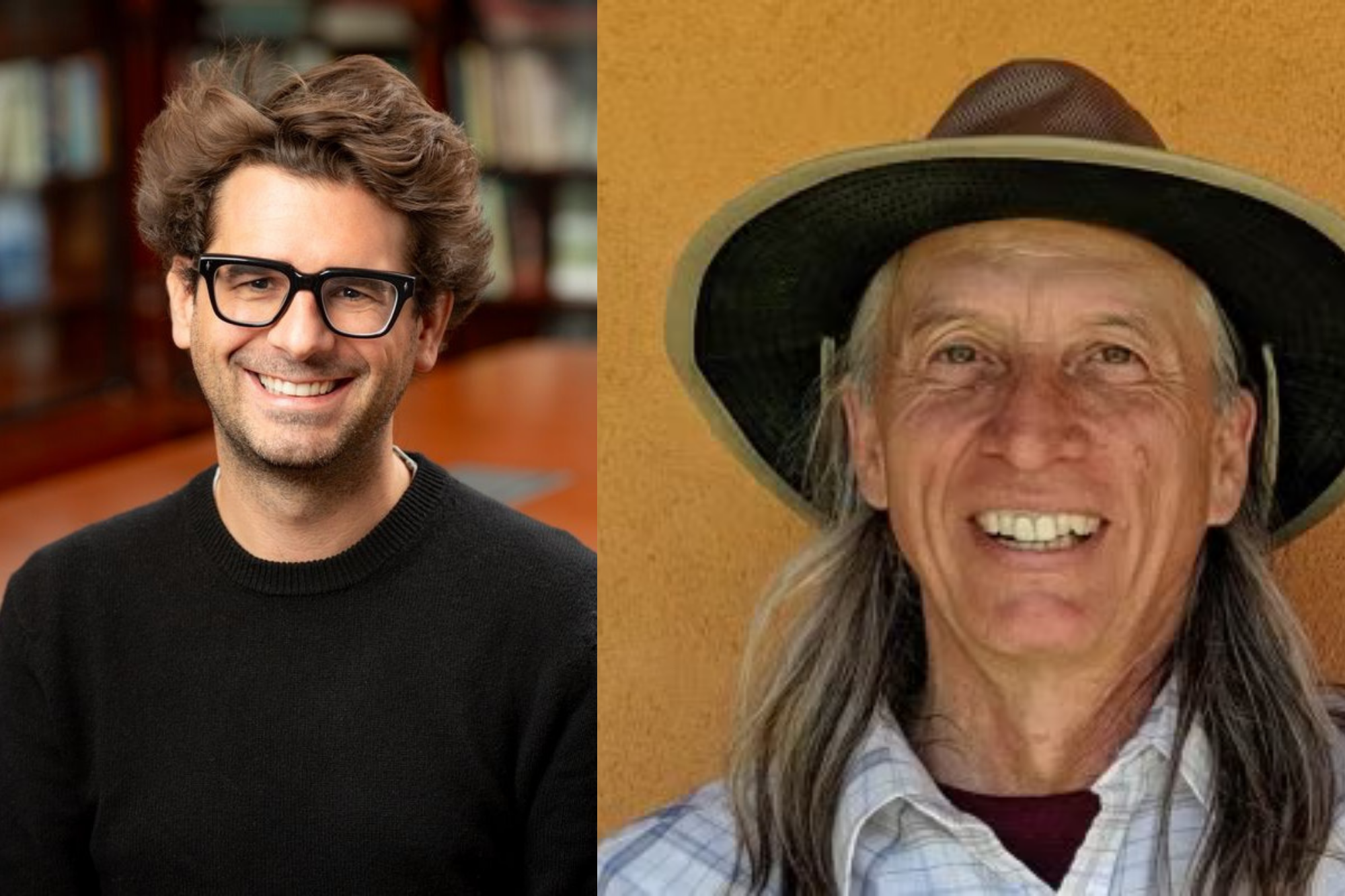
Join Craig and Lukus as they make a case for why prehistoric fossils taken from Lakotan treaty lands should be returned.
The United States dispatched legions of survey geologists to Lakotan treaty lands during the late 19th century. In addition to mapping the location and abundance of valuable resources for economic extraction, survey geologists also unearthed countless prehistoric fossils in the White River Badlands. As these fossils journeyed to urban museums in cities like Chicago and New York, they were stripped of their original meanings and inserted into a teleological narrative about the evolutionary history of life on earth.
In this presentation, we make a case for why prehistoric fossils taken from Lakotan treaty lands should be returned. In addition, we also provide a sketch for a new kind of exhibit featuring contemporary Lakotan artists alongside the material remains of prehistoric animals as a case study for how to interpret fossils from American Indian lands. This exhibit will focus on the lands, philosophies, and citizens of a specific tribal nation whose ongoing presence is central to a fuller understanding of the fossilized bones of animals currently on display all over the world, the site where they had been for millions of years, and their journey to imperial museums of natural history.
About Craig & Lukas:
Craig Howe, founder and Director of the Center for American Indian Research and Native Studies (CAIRNS), served as Deputy Assistant Director for Cultural Resources at the National Museum of the American Indian, and Director of the D’Arcy McNickle Center for American Indian History at the Newberry Library in Chicago. Howe, a citizen of the Oglala Sioux Tribe, has developed innovative educational projects related to tribal sovereignty and American Indian histories, including museum exhibitions, traveling seminars, and classroom resources. He is also designing and building Wingsprings, a unique architectural facility and surrounding nature reserve located on allotted trust land in the Lacreek District of Pine Ridge Reservation.
Lukas Rieppel is Associate Professor of History at Brown University, where he directs the Program in Science Technology & Society and teaches courses about the history of science, the history of capitalism, and the history of museums. His book -- Assembling the Dinosaur -- was published by Harvard University Press in 2019, and he is currently a Mellon Foundation New Directions Fellow, researching the deep history of Lakotan treaty lands.