
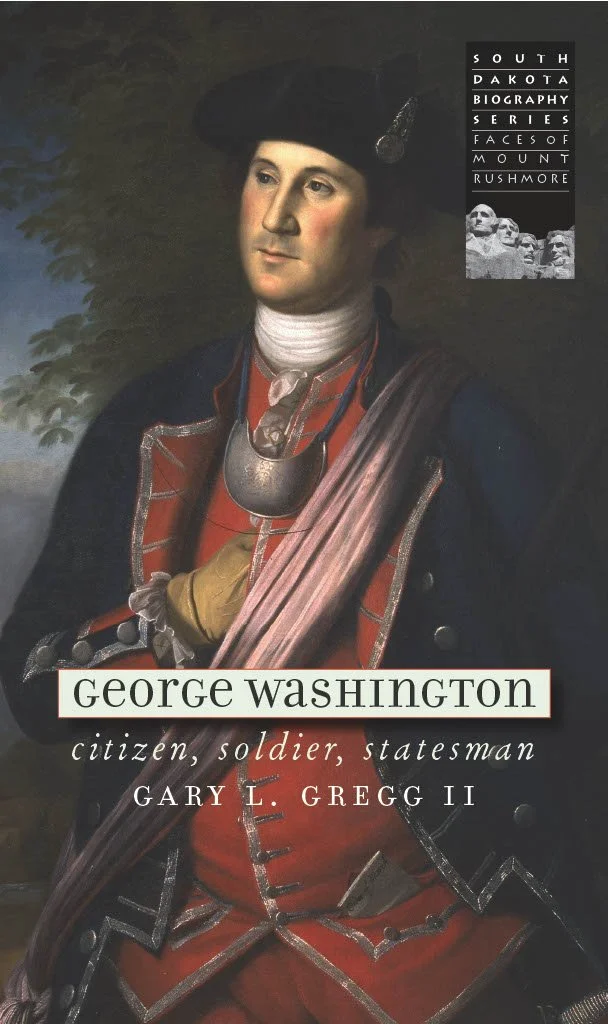
As commander in chief of the Continental Army during the Revolutionary War, president of the Constitutional Convention in 1787, and the nation’s first president from 1789 to 1797, Washington emerged not only as the United States’ leading statesman and foremost Founding Father, but as the living symbol of the American Revolution.
The strength of his character enabled him to triumph over challenges no other American has faced and to resist temptations few other historical figures have refused. His name and image are now so ubiquitous; his legacy and legend grew so much larger than life, that it may seem like he was destined to defeat the world’s most powerful empire and unify a sprawling new nation.
George Washington: Citizen, Soldier, Statesman is a timely reminder that contrary to his grand visage on Mount Rushmore, Washington was not born to greatness—he earned it.
Author Gary L. Gregg II highlights the crucial moments of Washington’s career to demonstrate that he was not just a great man, but a good one, who set an example worthy of emulation.
Gary L. Gregg II, Ph.D., is the Mitch McConnell Chair in Leadership at the University of Louisville and the Director of the McConnell Center. He is the author or editor of a dozen nonfiction books, including Reflection and Choice: The Federalists, the Anti- Federalists and the Debate that Defined America (McConnell Center Books, 2020).