
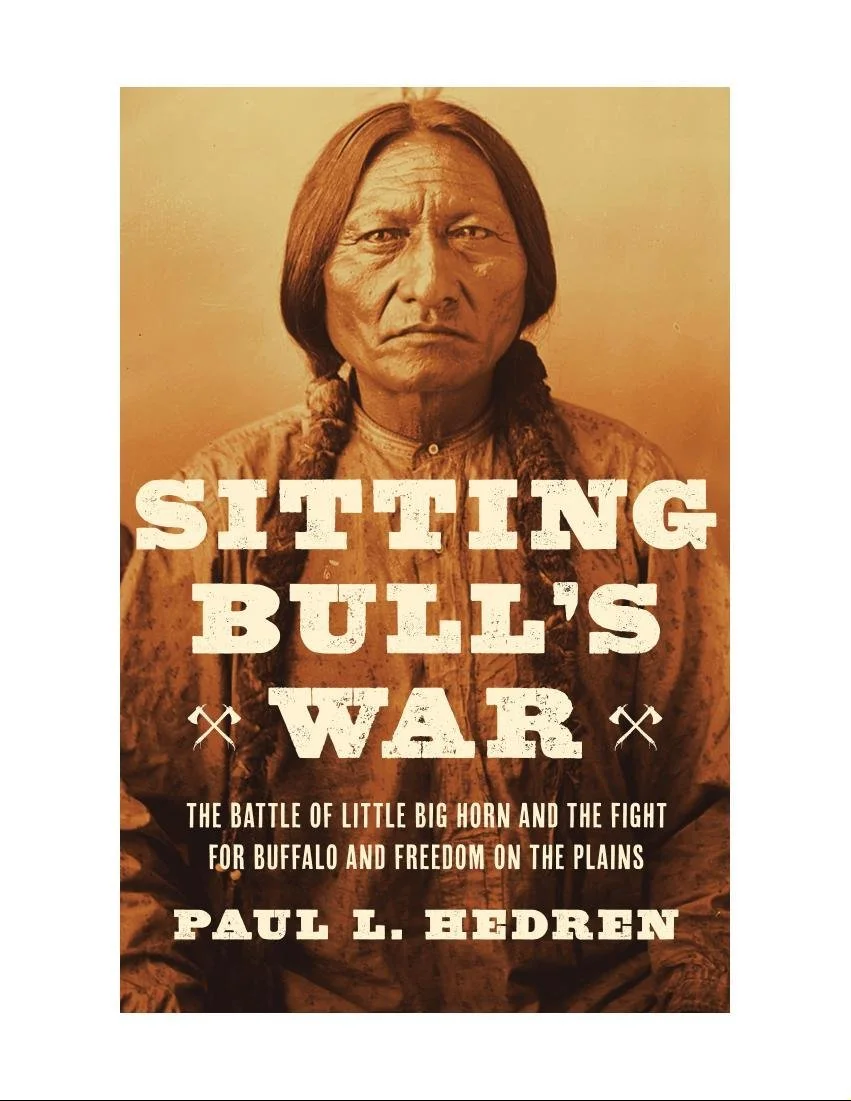
In this deeply moving account of America’s greatest Indian war, viewers are quickly immersed in the world of Lakotas and Northern Cheyennes, and their futile struggle in the 1870s to retain a lifeway on the buffalo prairie. Those ever-committed Northern Indians faced a succession of white invaders: railroaders, borderland surveyors, prospectors, and ultimately the United States Army.
In the best of days, they turned back George Crook at the Rosebud and wiped out George Armstrong Custer at the Little Big Horn. But a dozen other clashes followed, and in the end these tradition-minded people could not endure the army’s endless hounding. Some fled to Canada to a luring if momentary exile, but in the end one and all faced starvation, submission, and, for some, death. Sitting Bull’s War is the saga of a people intent only on adhering to a traditional life on the buffalo prairie.
About Paul:
Paul L. Hedren is a retired National Park Service historian and superintendent whose thirty-seven-years-long career led him from Minnesota to Wyoming, Montana, Utah, North Dakota, and Nebraska. He’s also a life-long student of the Great Sioux War, and a prolific writer. His many books and articles have received numerous honors, including a Spur Award from the Western Writers of America, a Western Heritage Wrangler Award from the National Cowboy & Western Heritage Museum, and multiple Best Book awards from the Little Big Horn Associates.
His life-long labors in history were acknowledged in 2022 by the John G. Neihardt Foundation with a prestigious Word Sender Award. A firm believer in the notion of landscapes as books, Hedren can commonly be found exploring the trails, battlefields, back corners, and sacred sites like that of the 1870s Indian war. When not in the field, Hedren resides in Omaha, Nebraska.
Winter/Spring 2026 Individual Tickets NOW AVAILABLE!
Log in to your online portal (accessible via our website) to get your member discount or call the front desk at (605)394-6923 and get your spot saved!